
The Autumn Canton Fair
Otc 23rd-27th
Booth No.: Hall 15.2 D25-26
We look forward to meeting you at the Canton Fair and starting a new chapter of win-win cooperation!

Views: 0 Author: Site Editor Publish Time: 2025-09-09 Origin: Site


When buyers in coastal homes, restaurants, or warehouses are looking for storage solutions, the first question often isn’t just about style or size—it’s about durability. Open Storage Racks placed in humid or chemical-heavy environments can easily rust or wear out if the wrong material is chosen. That’s why understanding corrosion resistant shelving options and how different finishes or designs handle harsh conditions is essential. Jiangmen Yongsheng Hardware Manufactory Co., Ltd. specializes in creating sturdy, stylish, and functional open storage racks designed to meet these exact challenges, ensuring long-term reliability in both residential and commercial spaces.
Choosing the right open storage rack begins with understanding where and how it will be used. Environments with high humidity, frequent cleaning, or chemical exposure can dramatically shorten the life of shelving if the wrong material is selected.
In coastal homes, salt air accelerates corrosion, turning ordinary steel racks rusty within months. Commercial kitchens face frequent exposure to water, steam, and strong cleaning agents, all of which can break down coatings or finishes over time. Warehouses may not seem as risky, but dust, moisture from loading docks, and temperature fluctuations can also degrade materials. For these reasons, corrosion resistant shelving is not a luxury—it’s a necessity.
It might seem cheaper to purchase a budget rack with a basic finish, but when rust spreads or welds weaken, replacement costs quickly add up. Beyond the financial cost, unstable shelving can pose safety risks and disrupt daily operations. A slightly higher upfront investment in quality materials and coatings ensures that racks last for years rather than months, ultimately saving money and avoiding downtime.
Selecting the right material for open storage racks makes all the difference in how they perform in tough environments.
Stainless steel: Highly resistant to rust, especially 304-grade stainless, making it ideal for food-service, medical, or humid conditions. Its sleek look also fits modern interiors, though it comes at a higher price.
Epoxy or powder-coated steel: A cost-effective solution where the coating adds a protective barrier. Best for dry or moderately humid spaces but can chip under heavy wear, exposing steel underneath.
Polymer shelving: Lightweight and non-corrosive, suitable for environments where chemical resistance is important. However, it may not carry as heavy loads as metal frames.
Galvanized steel: Protected with a zinc layer, offering good resistance against moisture and wear. Affordable and strong, but less stylish than stainless steel and not as durable under constant chemical exposure.
When reviewing rack specifications, look for details like “304 stainless” or “epoxy-coated.” The number “304” indicates a stainless steel grade with high chromium and nickel content, known for resisting corrosion. Powder coat thickness is often expressed in microns, where thicker coatings generally last longer. Understanding these terms helps buyers make informed comparisons instead of relying only on photos or vague descriptions.
Reliable manufacturers often specify weight capacity, salt-spray test hours, or NSF certifications. Salt-spray testing, for example, measures how long a coating resists corrosion in a controlled environment. These indicators give a clearer picture of durability than simple marketing claims.
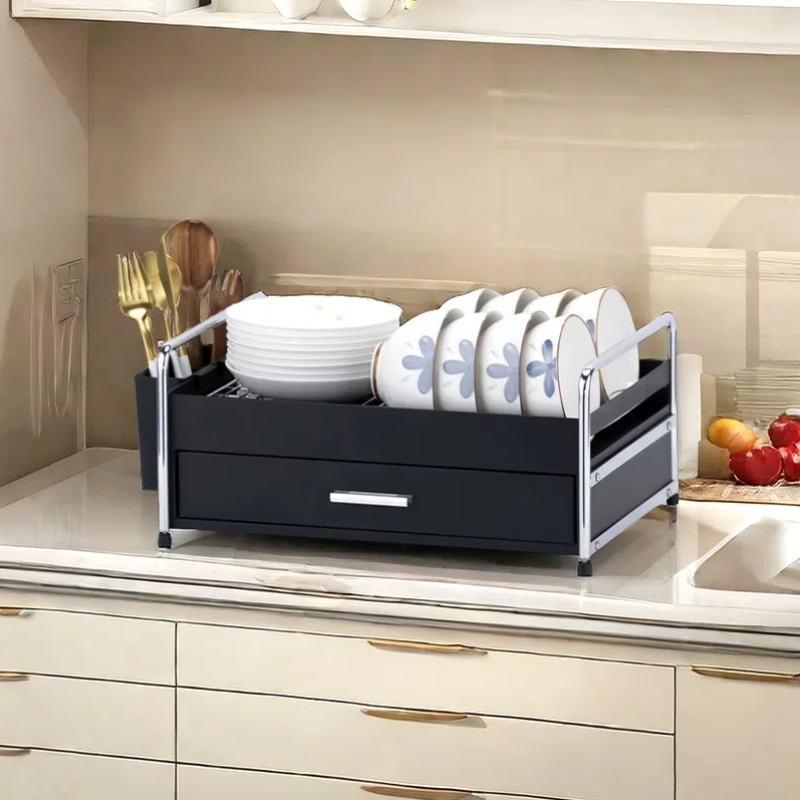
Beyond the base material, protective finishes are what separate racks that last from those that quickly fail.
Powder coating offers a uniform, durable finish, commonly used in warehouses and offices.
Epoxy coating is often applied to wire shelving, providing good moisture resistance but can break down in very wet or chemical-heavy settings.
Electro-polishing is a process for stainless steel that smooths the surface, removing impurities and increasing corrosion resistance. This is especially valuable in kitchens and laboratories.
Look closely at edge protection and corners—thin or incomplete coverage is often where rust first appears. A high-quality finish will be thick, smooth, and even, without bare spots or rough areas. Rounded edges and sealed welds are also signs that a rack will resist corrosion longer.
For restaurants, kitchens, or medical applications, NSF approval indicates that racks meet safety and cleanliness standards. This certification adds peace of mind that shelving is both corrosion resistant and hygienic.
The structure of open storage racks can be just as important as the materials used.
Boltless frames make assembly and reconfiguration easy but may loosen over time if not maintained. Welded frames, while heavier, often provide greater stability and fewer weak points where corrosion can start. Choosing between the two depends on whether flexibility or long-term sturdiness is the priority.
Adjustable shelving allows customization, but moving parts and release mechanisms can wear out. Look for durable locking systems that maintain stability even after multiple adjustments. The trade-off between convenience and long-term durability should be considered before purchase.
Racks with raised feet or casters prevent direct floor contact, reducing exposure to standing water. Anti-corrosion bolts and hardware, often overlooked, extend the lifespan of shelving in damp or chemical-heavy spaces. These design details may seem small, but they play a crucial role in ensuring long-term reliability.
Even the best corrosion resistant shelving needs proper care to maximize its lifespan.
For stainless steel, mild soap and water are best—avoid harsh chlorine cleaners that can damage the surface. Powder-coated and epoxy finishes should also be cleaned with non-abrasive agents. Polymer shelving requires only simple wiping, but harsh solvents can weaken the material. Establishing a routine cleaning schedule prevents buildup that accelerates corrosion.
Look for chips in coatings, especially at corners and welds.
Check fasteners and joints for rust or looseness.
Inspect casters and raised feet for wear or water damage.
A five-minute inspection every month can catch early damage before it turns into a major issue.
If coating damage is minor, refinishing with touch-up paint or sealant can extend rack life. However, if rust has spread deeply or structural stability is compromised, replacement is the safer option. Investing in durable open shelving initially reduces how often buyers face this decision.
Selecting the right open storage racks for humid or commercial environments comes down to understanding how environment, material, finish, and design interact. Stainless steel, polymer, galvanized, or powder-coated racks each have their place, but corrosion resistant shelving with high-quality finishes and thoughtful design features always delivers the best long-term value. Jiangmen Yongsheng Hardware Manufactory Co., Ltd. provides durable, versatile, and stylish open storage racks built for both residential and professional needs. To explore solutions tailored to your environment, contact us today for details or request an industrial quote.


